


A Brief History of Culture Jamming
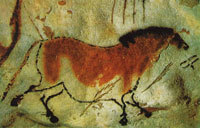
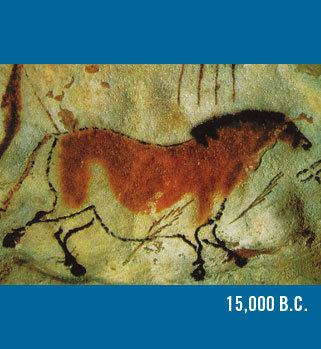
15,000 B.C.
First known form of graffiti: cave paintings in Lascaux, France.
1535–1541
Michelangelo, while working on the Sistine Chapel, subverts the
work by putting patrons' faces on the damned. He also depicts genitals,
which are later covered up by Daniele da Volterra, "The Breeches Maker."
1773
Boston Tea Party. This direct action protest puts "Buy Nothing Day" to shame.

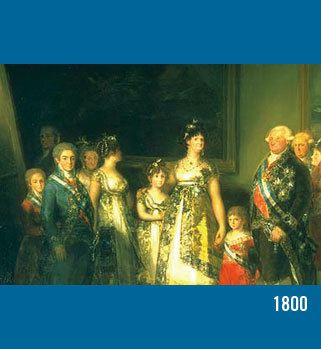
1800
Francisco de Goya y Lucientes paints "The Family of Charles
IV"-controversial because none of the people are made to look
attractive. Rather, he paints them as unattractive as they actually
appear.
1890s
Wheatpaste is widely used as an adhesive for posters, especially
posters of Toulouse-Lautrec paintings. The paintings are so popular and
so frequently torn down that they come with instructions on how to
remove them without ripping them.
1916–1920
Peak era of the Dada movement.
1938
Orson Welles' "War of the Worlds" is broadcast, convincing many listeners that an actual Martian invasion is underway.
1949
Edward H. Seymour, on the suggestion of his wife, Bonnie, invents the modern
aerosol spraypaint can in Chicago, Illinois.
1957
The Situationist International (rooted in Marxism) forms in the Italian village
of Cosio d'Arroscia. Guy Debord is the most prominent French member.
1960
Jørgen Nash and Asger Jorn form the Situationist Bauhaus.
1966–1971
The first modern graffiti artists, "Cool Earl" and "Cornbread," begin work in Philadelphia.
1968
In May, students in Paris occupy the Ecole des Beaux Arts to
produce posters that "give concrete support to the great movement of
the workers on strike."
1969
John Lennon and Yoko Ono spend their honeymoon in Amsterdam in bed, performing their "bed-in" in the name of peace.
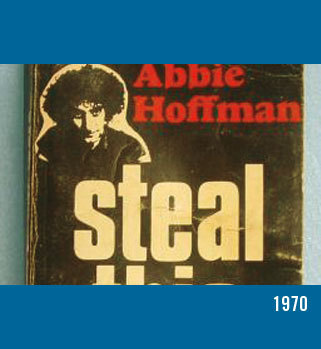
1970
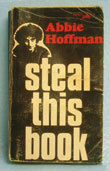
Abbie Hoffman writes Steal This Book, a manifesto and instruction
manual that advises readers on topics like growing marijauna, living in
communes, pirating radio signals, stealing food and credit cards,
making pipe bombs, and obtaining a free buffalo from the U.S.
Department of the Interior.

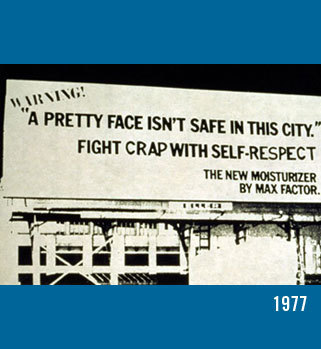
1977
Billboard Liberation Front "improves" its first billboard, Max Factor 26.
1981
Jean Baudrillard publishes Simulacra and Simulation.

1981–1983
Parisian Blek le Rat begins a stencil street-art campaign (the
stencils being a means of differentiating himself from New York
graffiti artists).
1982
Jay Conrad Livingston writes Guerrilla Marketing.
1985
Negativland coins the phrase "Culture Jamming" on the collective record JAMCON '84.

1989
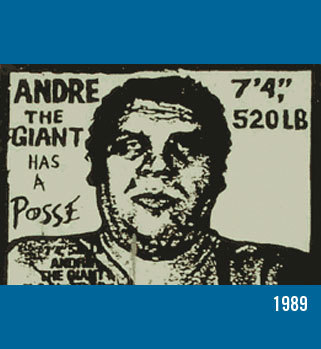
Shepard Fairey begins the OBEY GIANT campaign, what he calls "an
experiment in phenomenology," and it proves to be just that: 13 arrests
and 17 years later, his is the most recognizable
street-art campaign in history.
Barbie Liberation Organization is formed. Thanks to similarities in the vocal hardware of Teen Talk Barbie and the Talking Duke G.I. Joe, BLO is able to swap the voice boxes of the toys.
1989
Adbusters launches.
1991
Negativland releases fake U2 single by sampling parts of U2 songs.
U2 sues (and, ironically, later uses many samples on their POP tour).
1992
Members of Negativland conduct an (ambush) interview with The Edge,
who, once they reveal their identities to him, stutters and bumbles his
way through the rest of the interview, claiming U2's label (not the
band) pursued the lawsuit.
1994
Justin Hall creates his "Links from the Underground," the
internet's first self-published home page, for which the New York Times
Magazine later hails him as "the father of personal blogging."
1997
The Activist Cookbook: Creative Actions for a Fair Economy, by Andrew Boyd, is published.
1999
The Yes Men create www.gwbush.com in preparation for the 2000
presidential election. Bush, when asked about the defamatory site, says
that the site went too far and that "there ought to be limits on
freedom."
2001
January 5 Jonah Peretti orders a pair of custom Nikes with the word
"sweatshop" embroidered on them. Nike refuses. The email dialogue
circulates around the internet.
January 15
Wikipedia launches, inspiring debate about authenticity of and authority over information.
2003
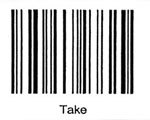
Bar code artist Peter Coffin starts distributing downloadable,
printable bar codes that, once adhered to a product and scanned,
display a word ("want," "take," "give," "lose") on the register,
instead of a price.

2004
Adbusters sues six major Canadian broadcasters after they refuse to
air "subverstisements" for which Adbusters purchased airtime. This same
year it launches the Blackspot Sneaker Campaign.
2005
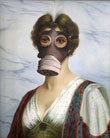
Bansky places his works in the Museum of Modern Art, The
Metropolitan Museum of Art, The Brooklyn Museum, and The American
Museum of Natural History.
Google Bombing: Yooter reports that "The Presidency of George W. Bush" is the first link that appears for the search "failure" or "miserable failure."
Marissa Mayer from Google responds: "We don't condone the practice of Google Bombing, or any other action that seeks to affect the integrity of our search results, but we're also reluctant to alter our results by hand in order to prevent such items from showing up. Pranks like this may be distracting to some, but they don't affect the overall quality of our search service, whose objectivity, as always, remains the core of our mission."
Like this article? Tell the world It's Good!







Speak Up
Leave a commentMake it GOOD! This will be posted to your personal blog too.
* Fields marked in red must be completed
User comments (0)