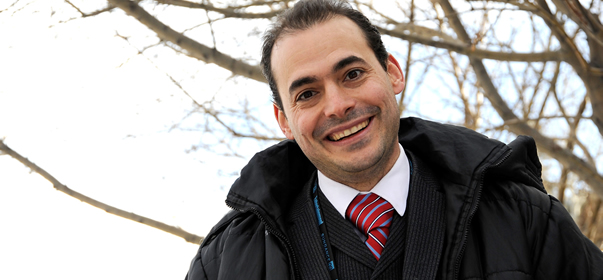


Q&A: The Yes Men Fix the World
The activist-troublemakers behind The Yes Men Fix the World answered the audience’s questions after a recent Festival screening, including the answer to whether there are any warrants out for their arrest.
“We wanted to actually give voices to the people that were directly affected by the policies we were going after.”
– Andy Bichlbaum, co-director, The Yes Men Fix the World
– Andy Bichlbaum, co-director, The Yes Men Fix the World
They’ve been called everything from heroes to troublemakers and harbingers of false hope – but to those companies of the less scrupulous variety, The Yes Men are quite simply a royal pain in the backside. Riding the success they received as the subjects of an earlier Festival documentary (The Yes Men, 2004), activists Andy Bichlbaum and Mike Bonanno took the reins themselves on The Yes Men Fix the World as the daring duo continued to kerfuffle corporate baddies with well-planned hoaxes and civil disturbances. After the film made its premiere at the Festival, Bichlbaum and Bonanno answered the audience’s questions.
Q: Do you have any outstanding warrants at this time?
Bonanno: No. In fact after the scene where we were
taken away, the Canadian police took us away from private security and
told them that they couldn’t do anything to us. We did get a
trespassing ticket but they threw it out. The crown refused to hear it.
Q: Obviously the press was saying you guys were doing wrong or
giving false hope. It should be shown that what you were doing was good
and right. What are your plans to get that out there?
Bonanno: We need distribution. We want this to show on
TV and in movie theatres. We want to work with organizations to see
what ways we can collaborate on their campaigns.
Bichlbaum: This is the beginning of that. We don’t know where it’s going to go yet. If you have ideas, please do come tell us.
Q: What was the experience of making this film yourself?
Bichlbaum: Working with Chris Smith on the first film
was a great experience. This movie was an arduous experience and quite
exhilarating at times, but far more difficult than we imagined. But we
discovered a lot of stuff along the way. Hopefully it was worth it.
Q: How did you decide you wanted to direct it yourselves?
Bichlbaum: We wanted to get in a lot more documentary
material and actually give voices to the people that were directly
affected by the policies we were going after. So we figured we would
just do it ourselves.
Q: How much research did you do in advance of each individual story you told?
Bonanno: It depended on how quickly we had to do the
thing. Our research is based on hard work that’s done by journalists
and by environmental organizations. With Dow, Greenpeace had made it a
major campaign issue partially because of Dow’s history as a large
chemical company and also because of their refusal to pay for Bhopal
(India). Greenpeace was seeing Bhopal as a real test case because it
was the largest industrial accident in history and hasn’t been cleaned
up. So it’s always a challenge to learn enough about the issues we need
to address before we go on a stage.